CONSCIOUS STRUCTURES. THE JOURNEY OF AUTOPOIESIS (2021)
Doctoral Exhibition
Barak Kultury Foundation, Poznań, Poland
Curator: Joanna T. Woźniak | Co-funded by the City of Poznań
Also presented at: Serhii Korolev Astronautics Museum, Zhytomyr, Ukraine (2021)
Supported by the Adam Mickiewicz Institute
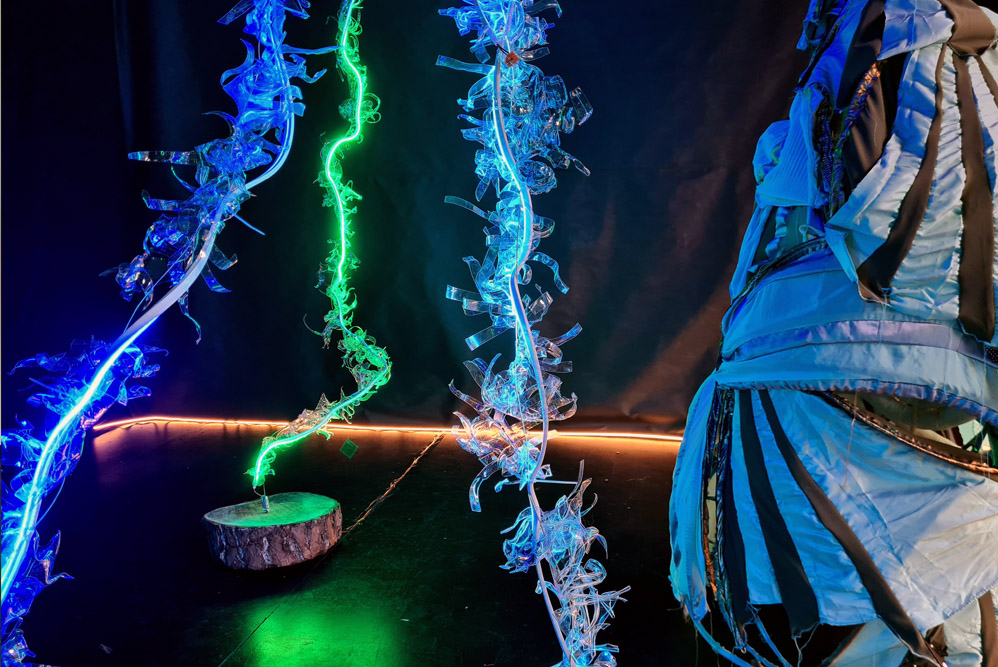
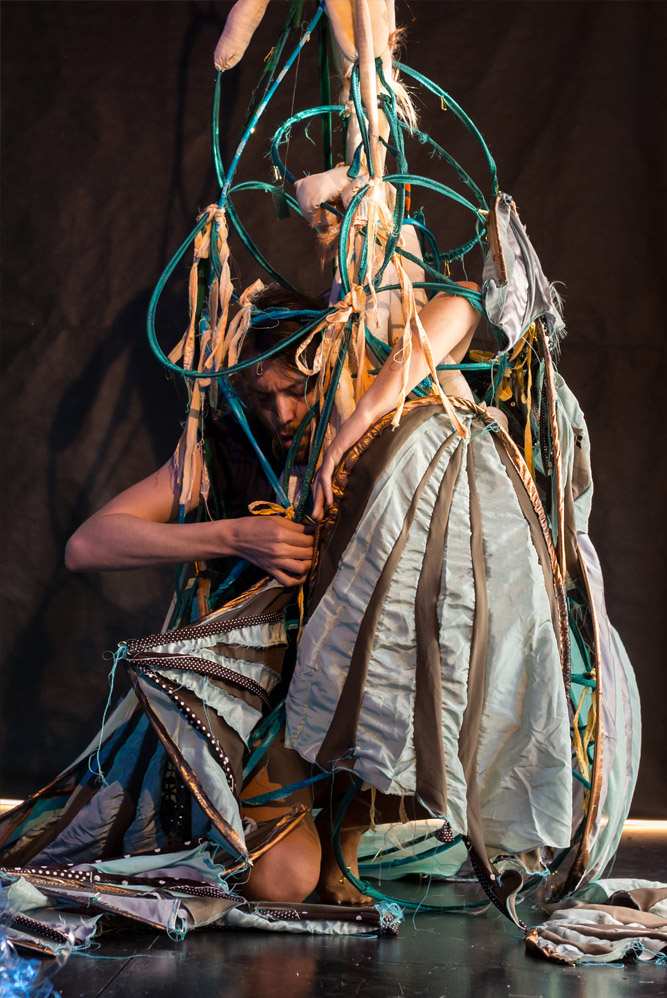
“Conscious Structures. The Journey of Autopoiesis” is a vision of a futuristic, post-apocalyptic ecosystem that rebuilds its structure from existing elements, but in a new order. Here I draw on the principles of an autopoietic system. The objects in the exhibition were made from used and found materials. They are performative in character. The performer acts according to the laws of their own body, in harmony with the objects and the people around them, following both a sense of self and a feeling for space. It was important to create a situation in which a person perceives themselves as a living form, connected through an ecological relationship with the surrounding matter and with other forms of life.
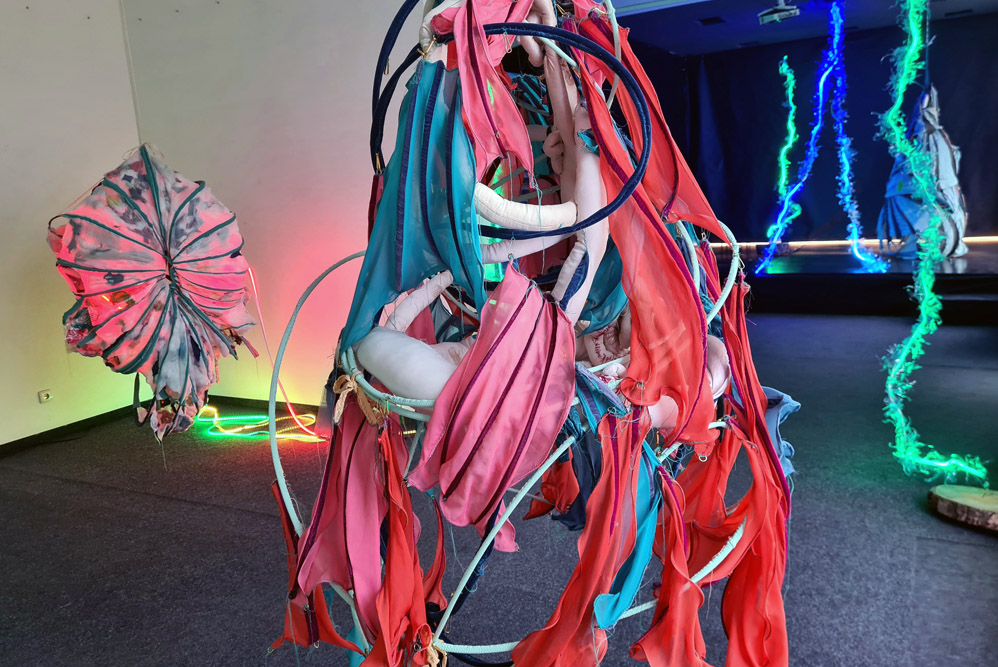
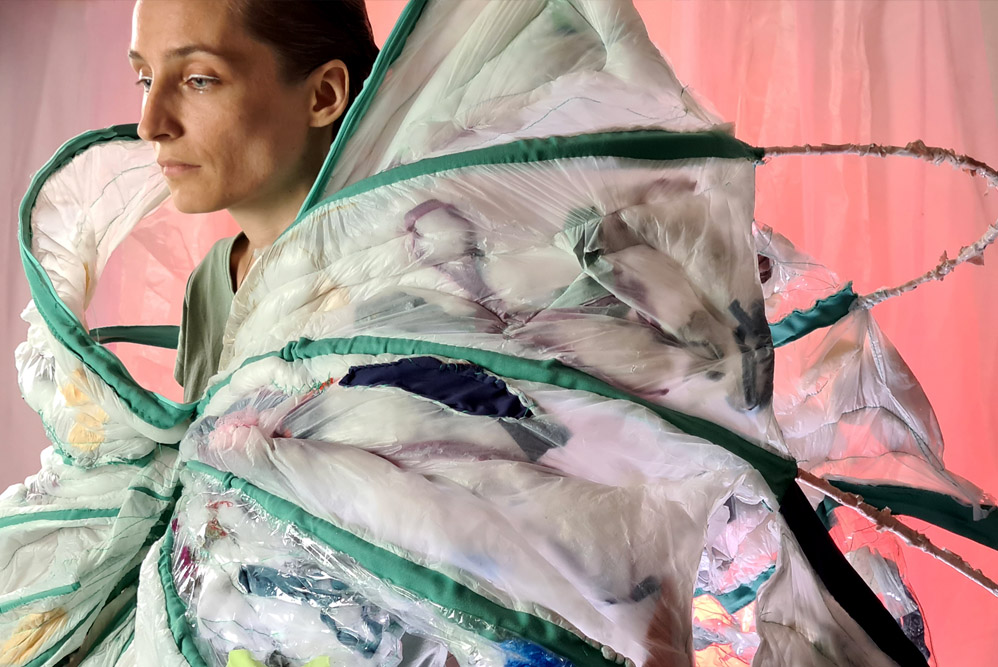
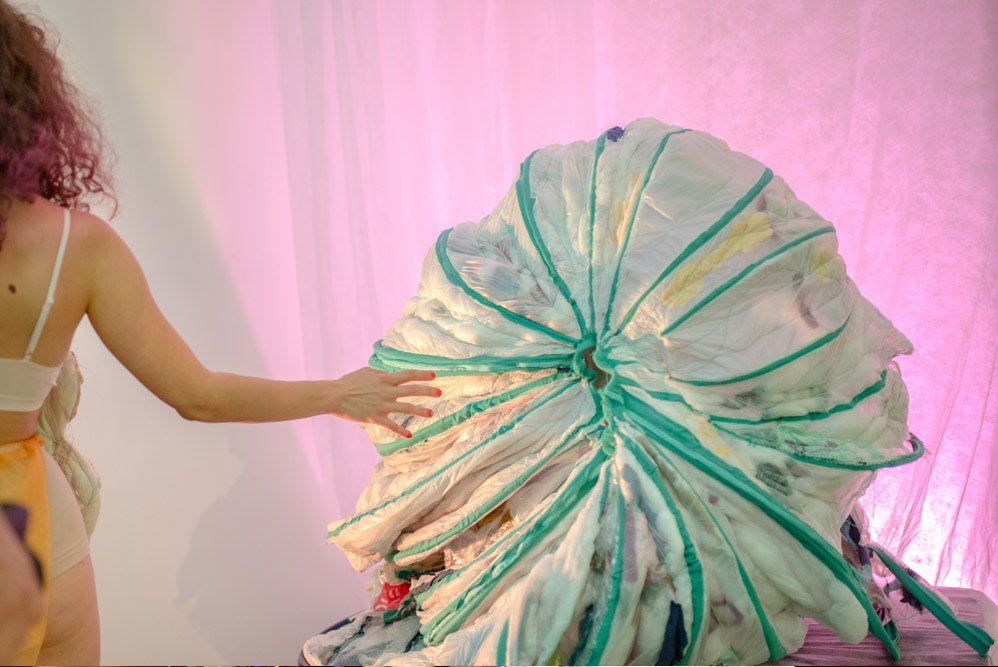
Anaerob
Materials:waste; plastic bags, textiles, plastic structure, 100 × 120 × 160 cm
Collaboration
Natalia Szkraba (BY)
GUMA – Tetiana Khoroshun, Yana Shliabanska, UA
Observation of nature, and admiration for it, became the starting point for building the structure of the exhibition. The invited performers developed their own rhythm and style of relating to the object. Each of them, as an independent living form, functions on its own timeline. There is none of the linearity of a theatrical event here, only processes inspired by nature: awakening, flourishing, decay, reaction to emerging external factors. Every action, even the smallest, is “ordinary” for a given living form, yet it is also an experience for the performer. It is meant to become one for the viewer as well.
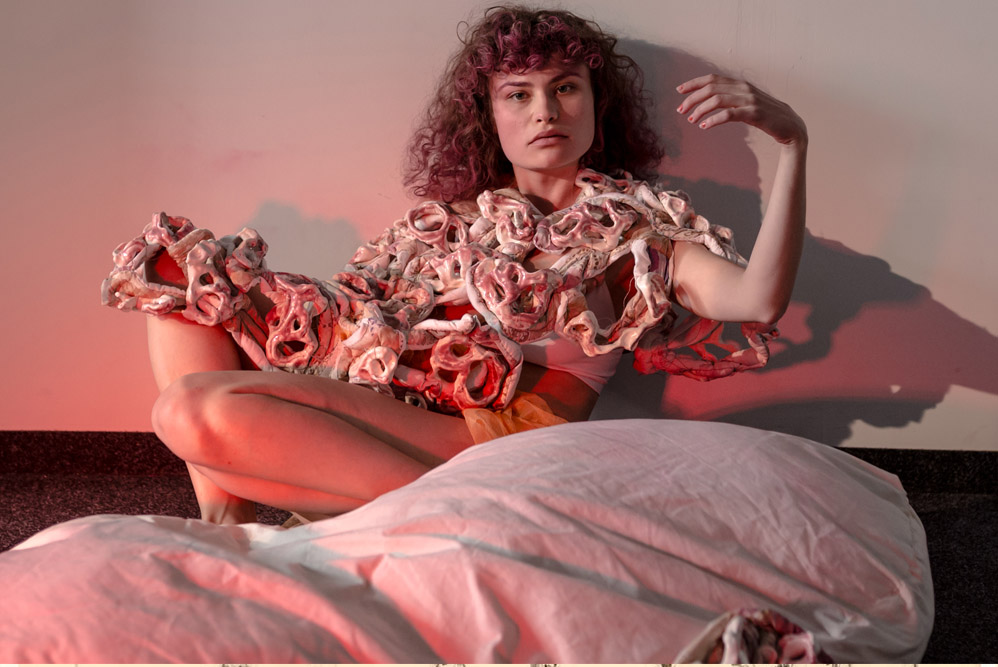
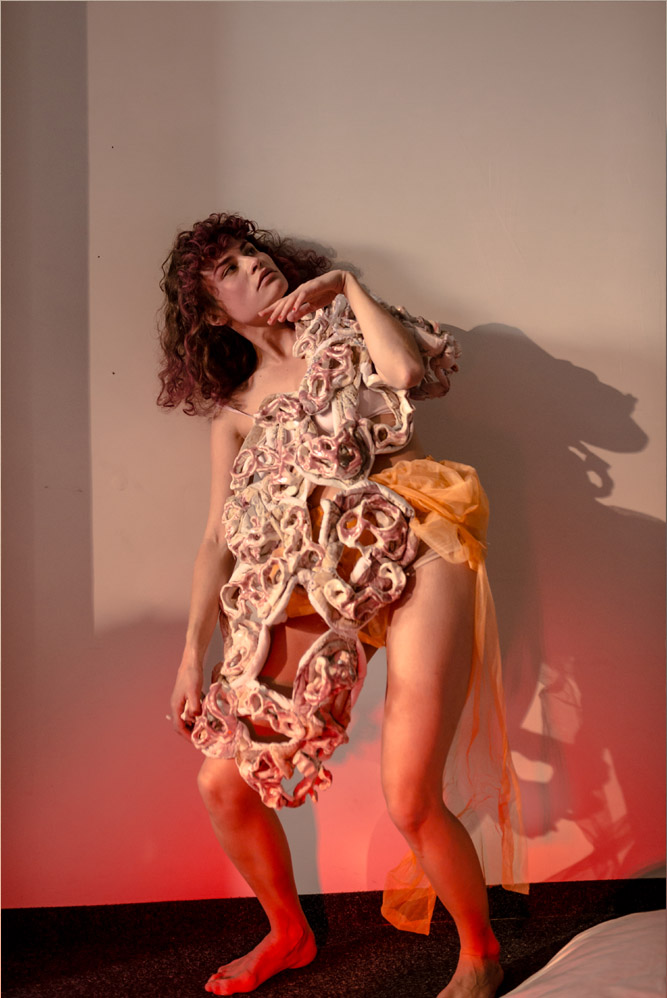
Petrification
Materials: ceramics, recycled textile, 150 × 70 × 30 cm
Collaboration
Cristina Negucioiu (RO/DE)
Marcin Baran, PL
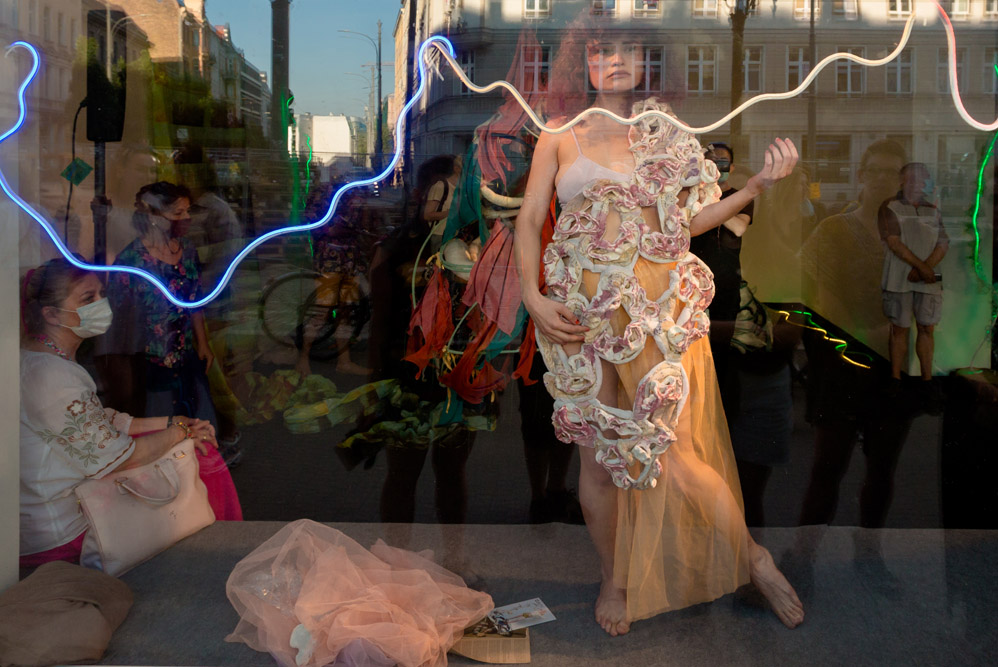
What matters to me is bringing a form of nature observation into the gallery space. It is not about looking at an art object or at a performer, but about focusing on the act of observing itself.
To observe means to notice even the smallest movement, to hear the faintest rustle, to perceive what the person next to you may not notice. I understand it as a walk in the forest or lying in a meadow for hours. Waiting for that rare encounter, opening oneself to the surroundings. At last, the mind can grow quiet.
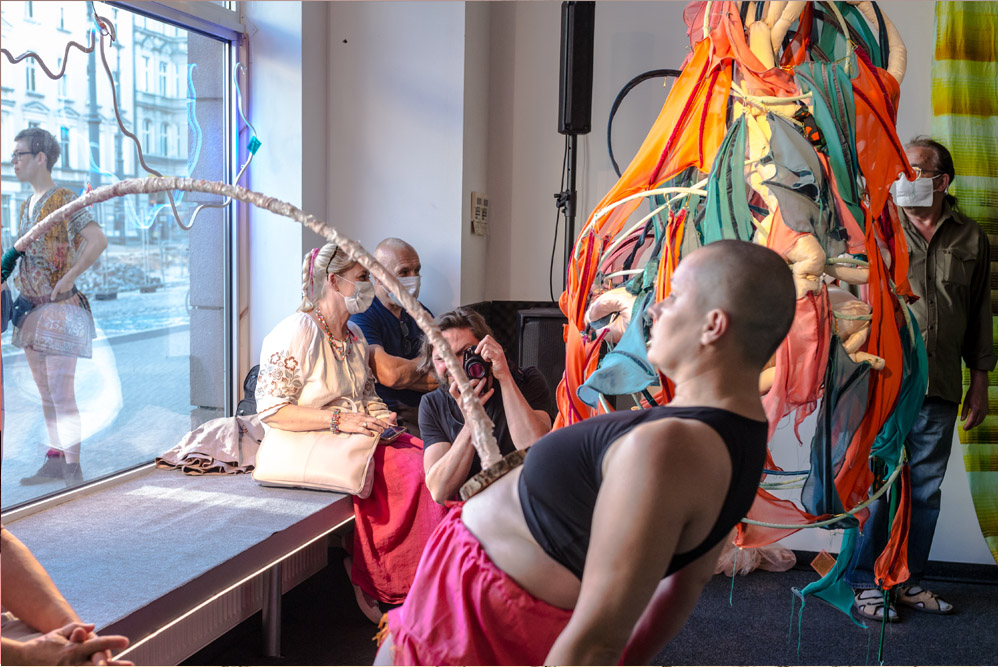
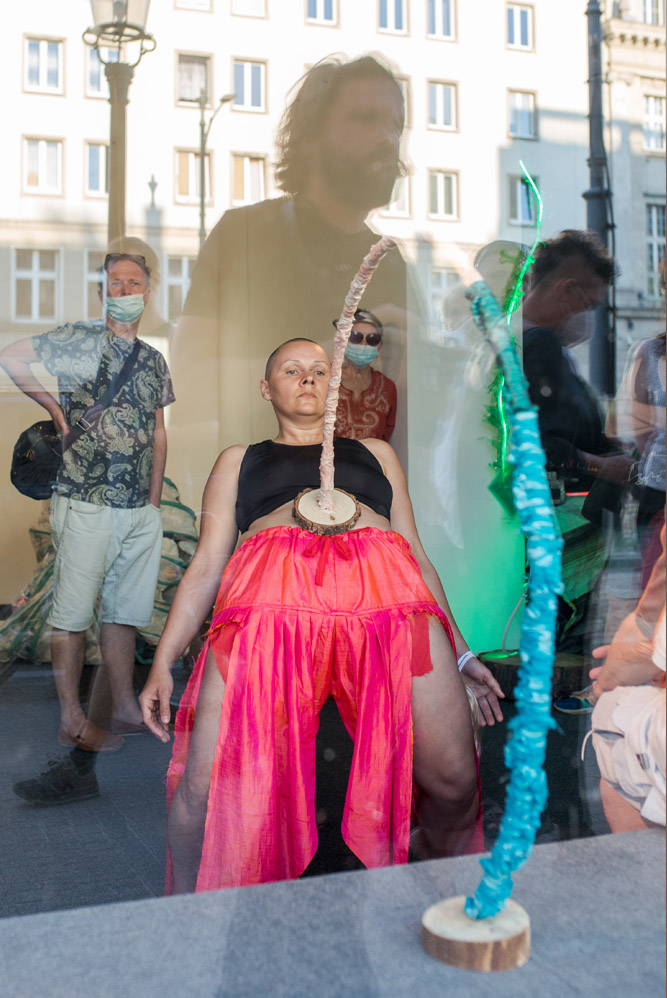
Arista
Materials: waste; textiles, silicone, plastic structure, wood, 80 × 50 cm
Collaboration
Monika Wińczyk (PL)
GUMA – Tetiana Khoroshun, Yana Shliabanska (UA)
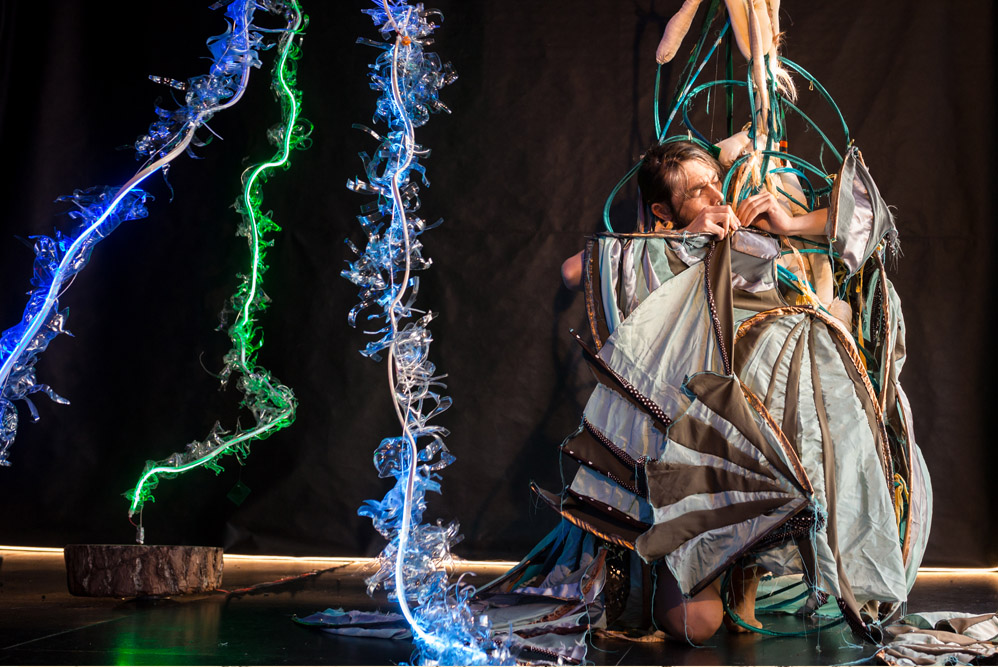
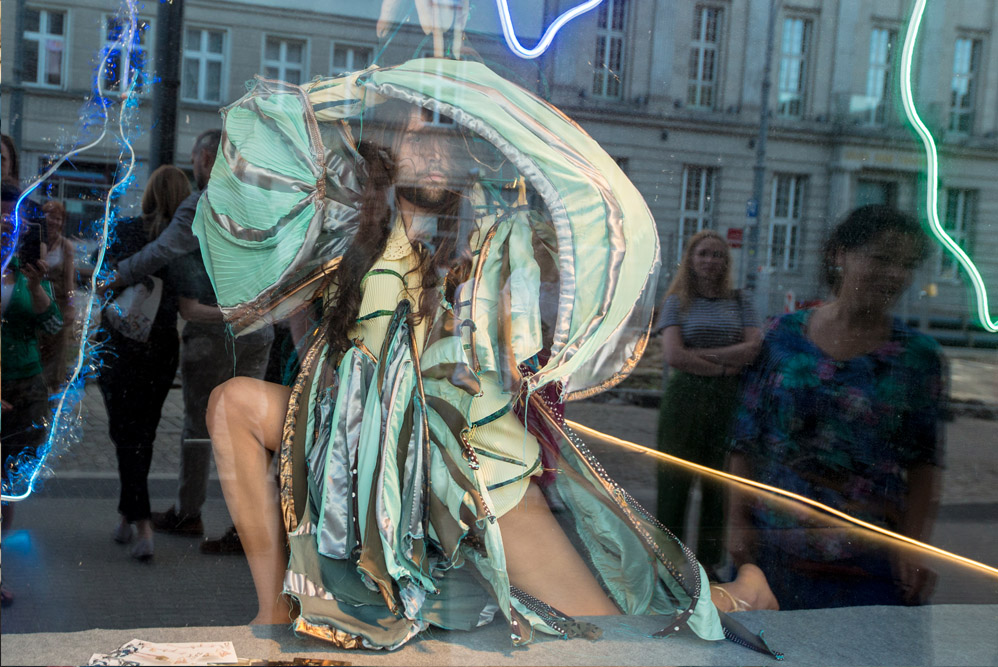
Philodendronpoiesis classic
Materials: waste; textiles, plastic structure 230x 90x75cm
Collaboration
Gabriel Mañes Preciozzi (ES)
Tetiana Khoroshun (UA)

Philodendropoiesis variegated
Materials: waste; textiles, plastic structure 190x 80x80cm
Collaboration
Ola Koczurko (PL)
Marcin Baran / Singing: Ola Koczurko
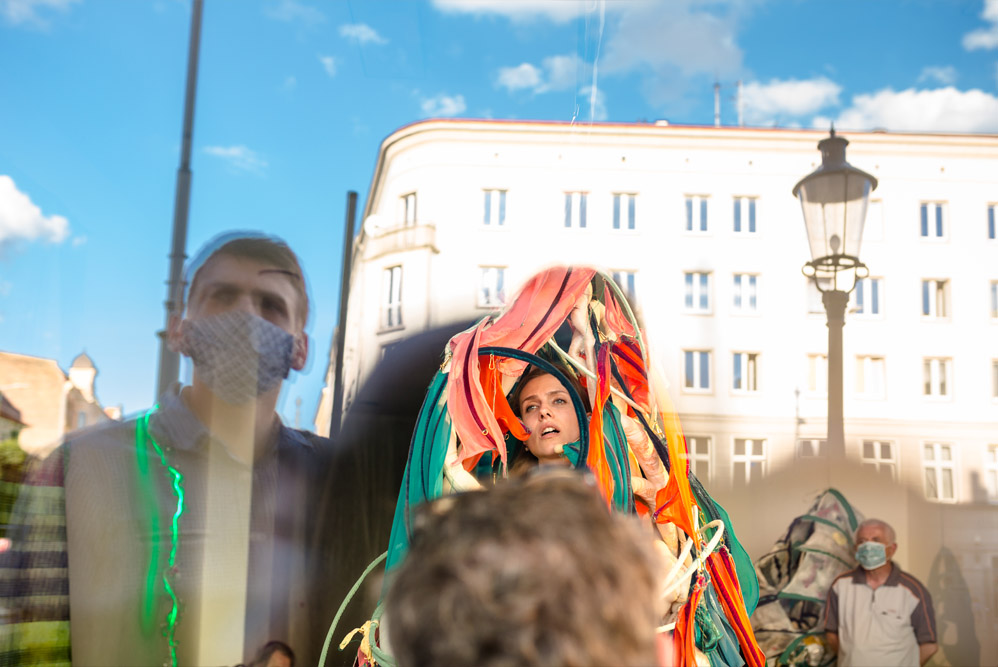
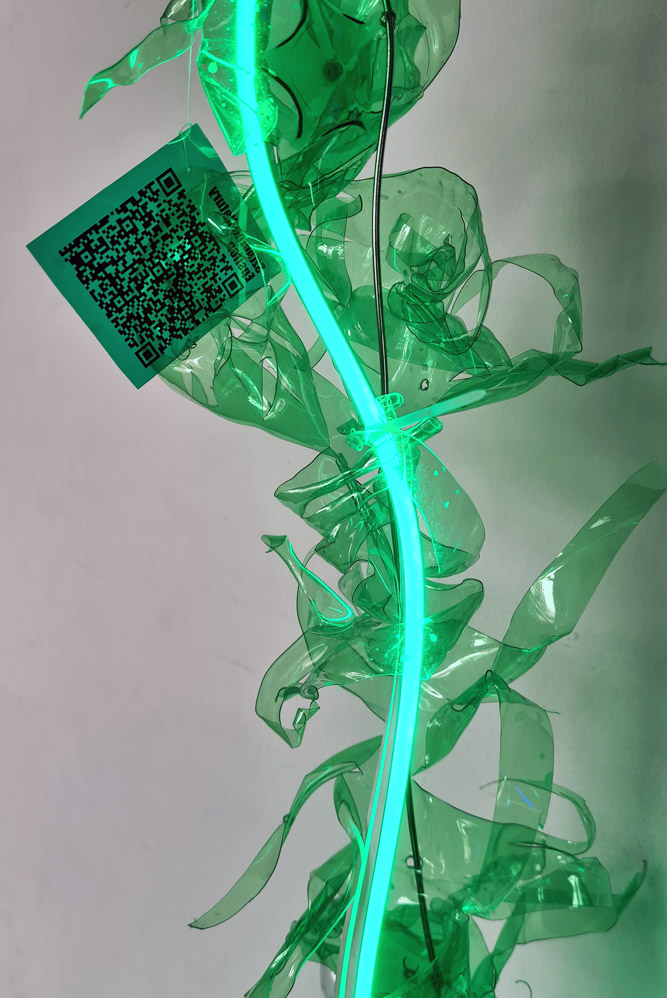
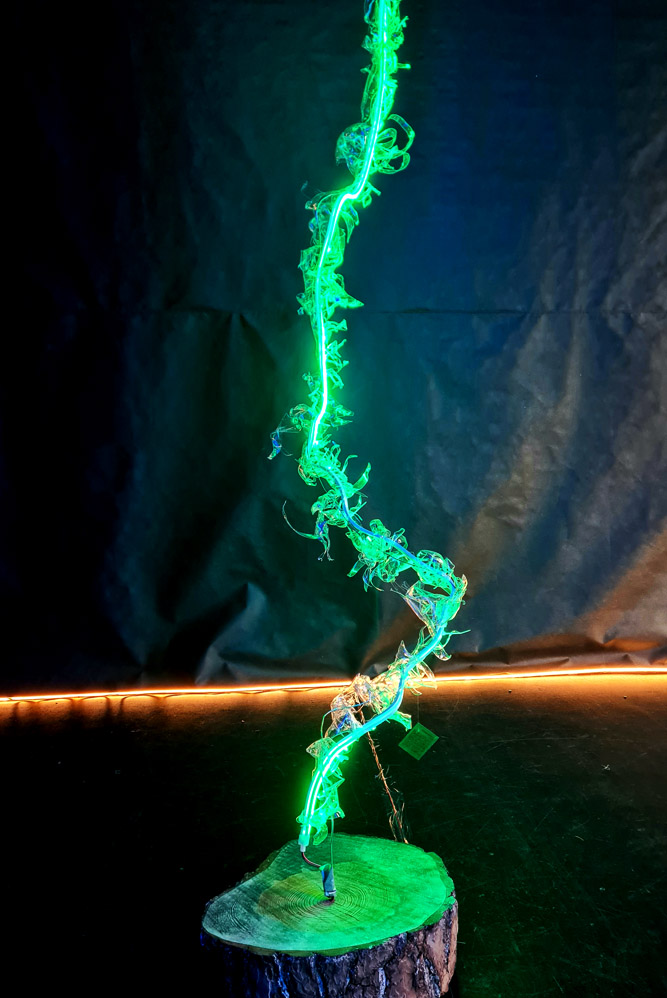
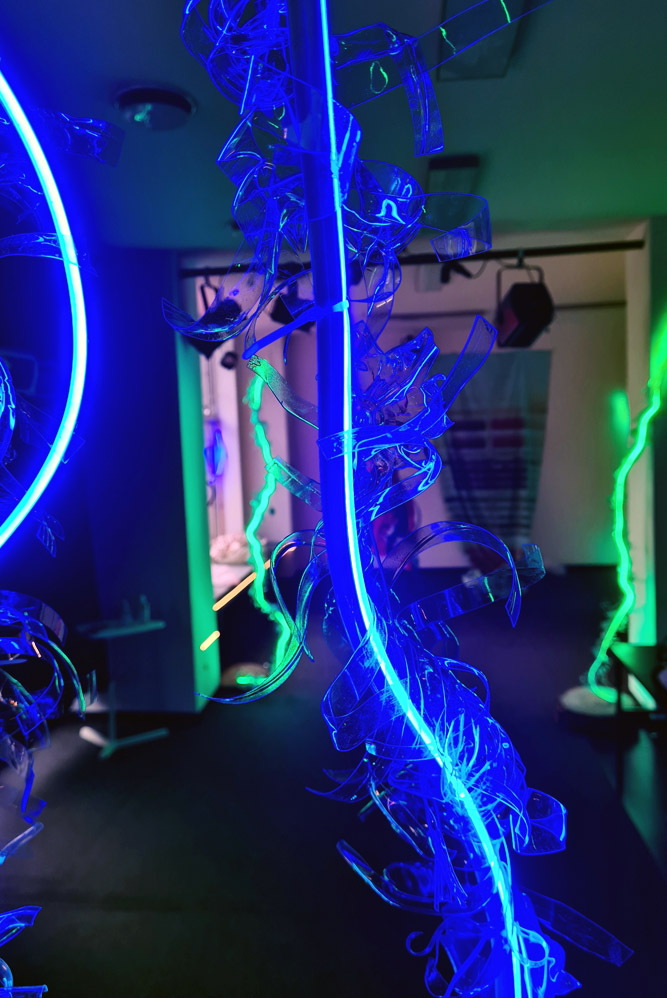
The installation is at the heart of the exhibition: a futuristic vision of an environment reconstructed on the remains of civilisational waste. Each object has its own sound, which emerged through evolution: the voice of this new ecosystem (the result of collaboration with composers from Poland and Ukraine). Viewers can listen closely to the voice of this post-apocalyptic nature.
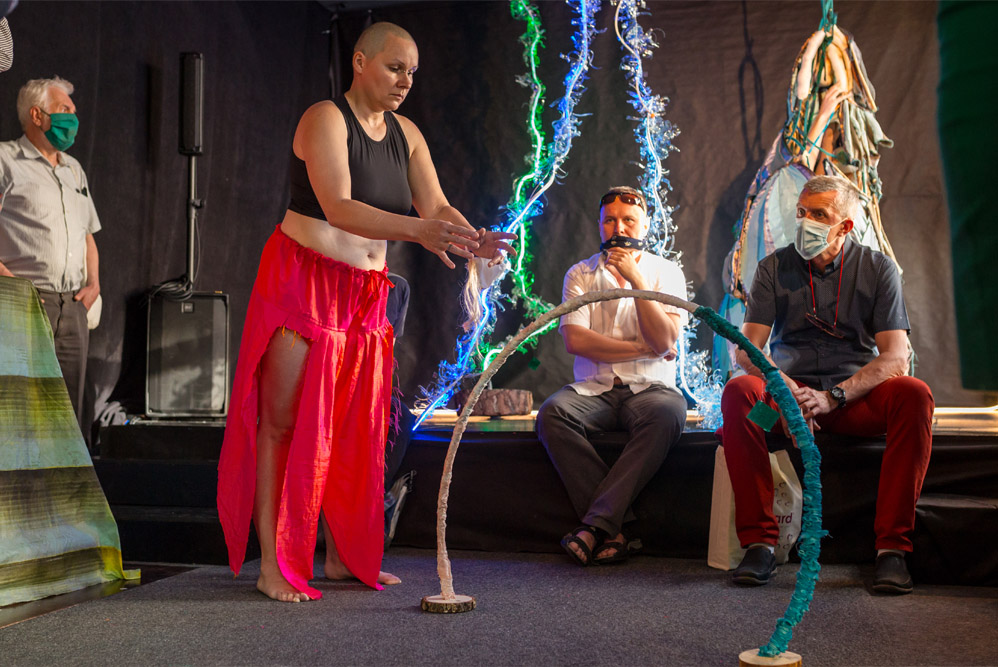
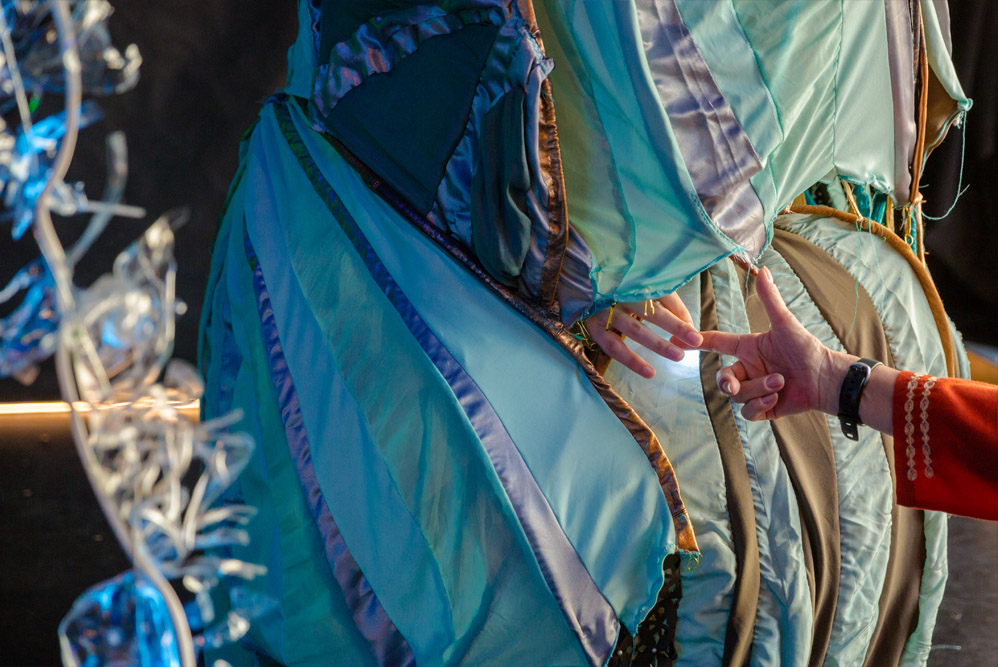
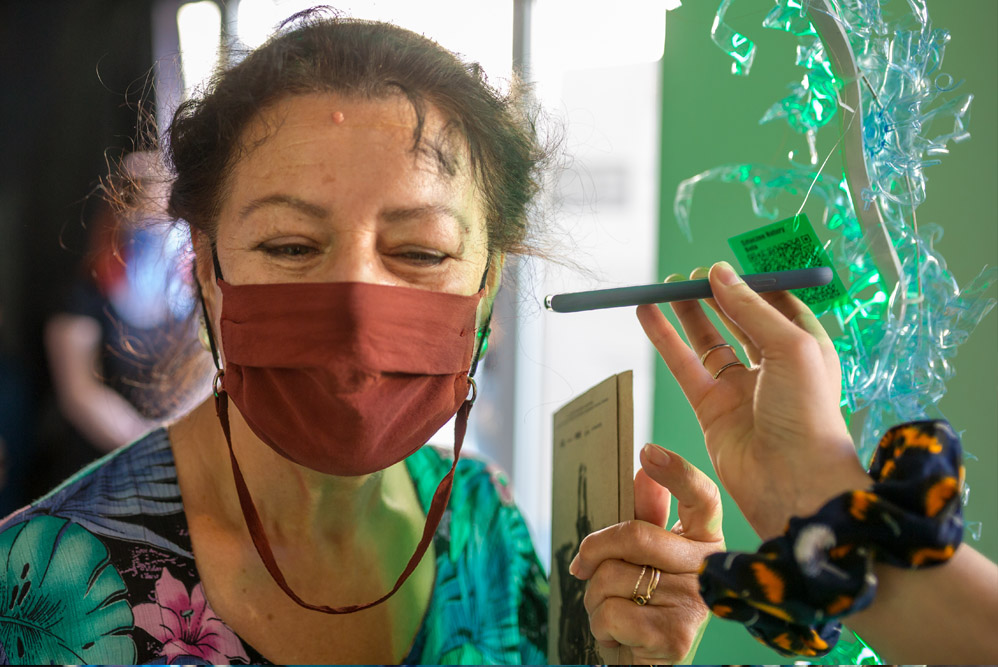
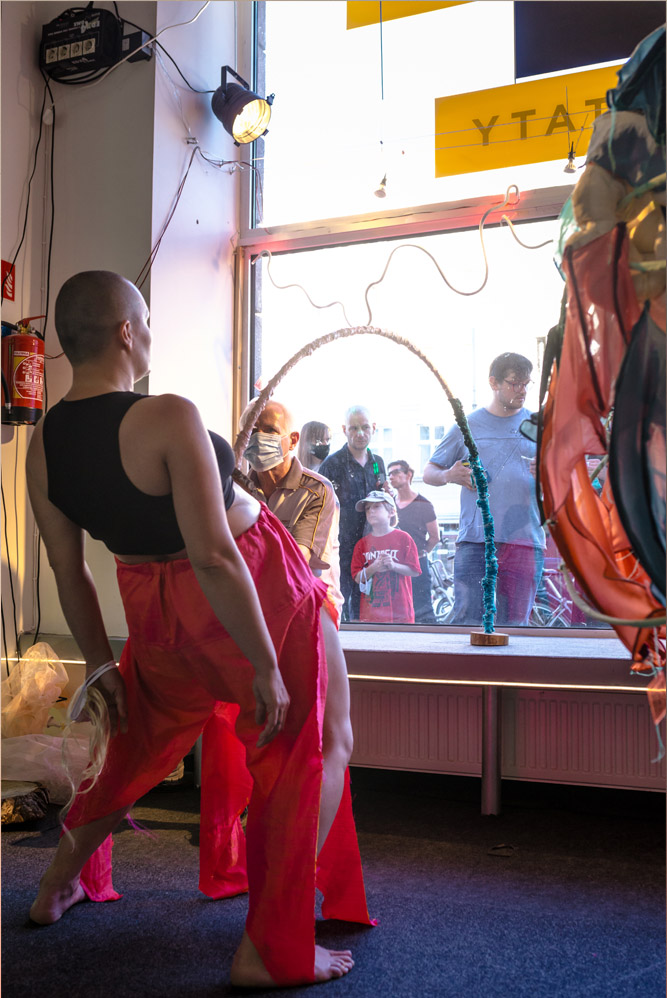
The exhibition was designed during the pandemic and takes two forms. The first is traditional and haptic, open to the active participation of the viewer. The second, required for safety reasons, takes place at a distance, in virtual space, behind two panes of glass: the one in the window and the one in the phone.
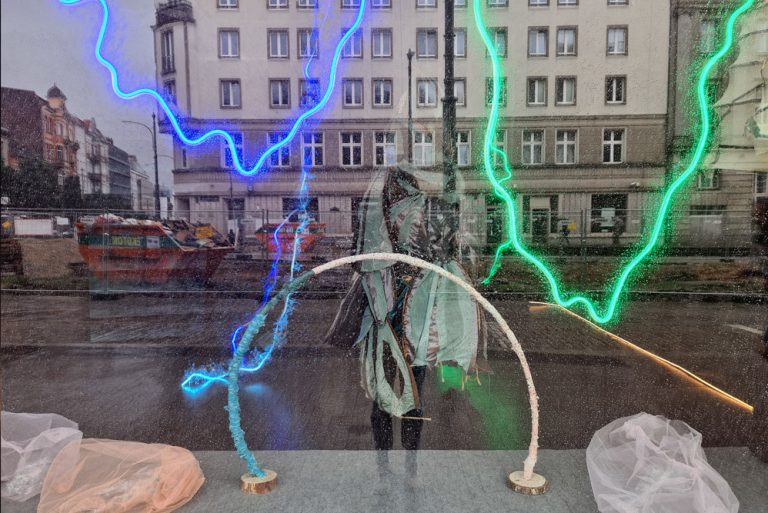
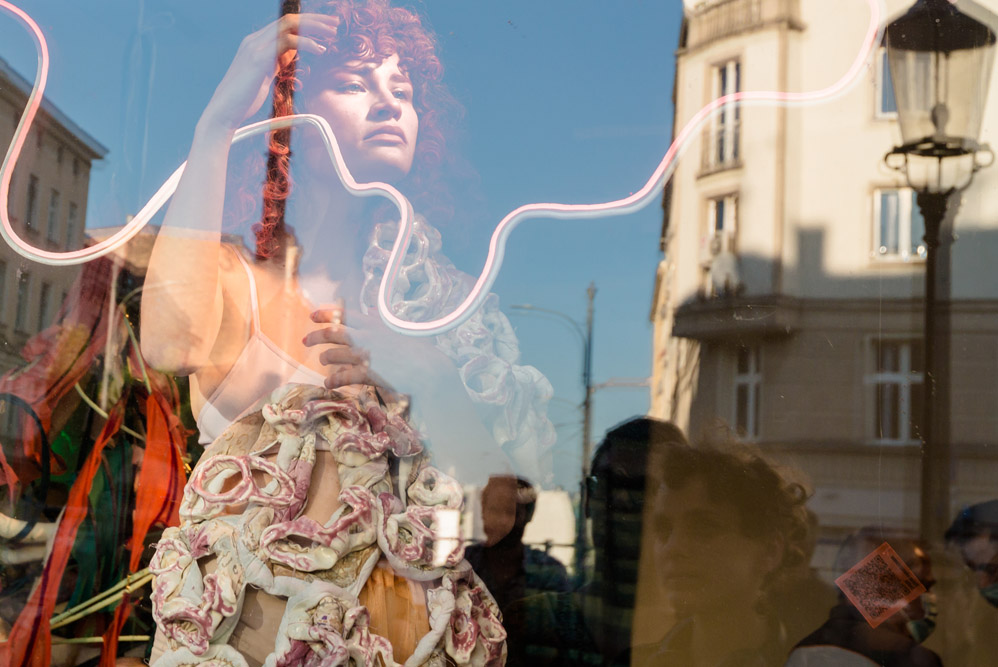
A further strength of the exhibition is its visibility from the outside. A QR code placed in the window makes it possible to listen to the sounds on a mobile device and view the exhibition from the street at the same time.
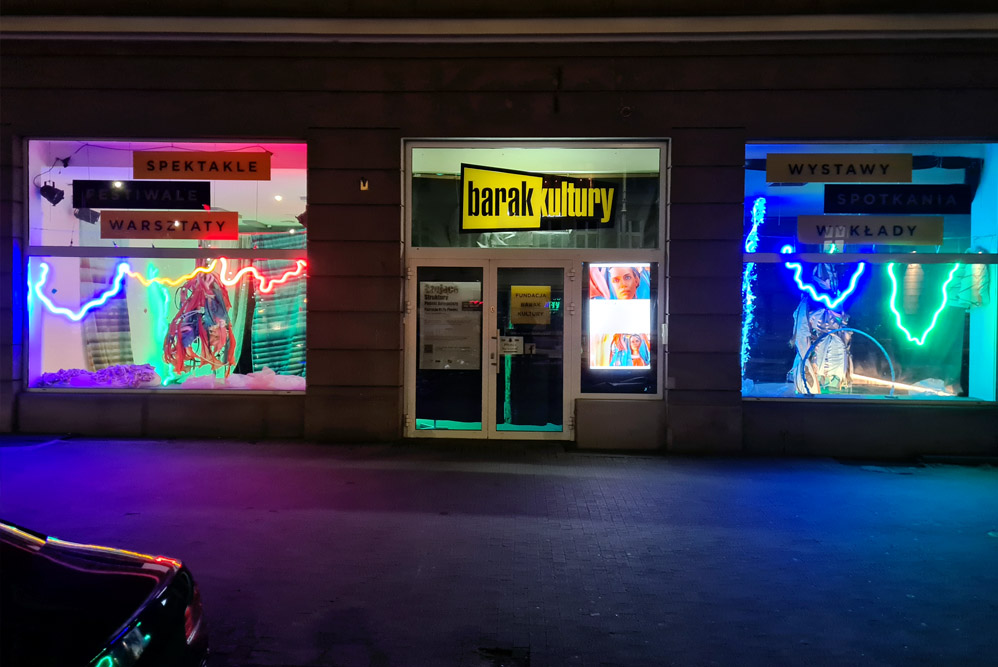
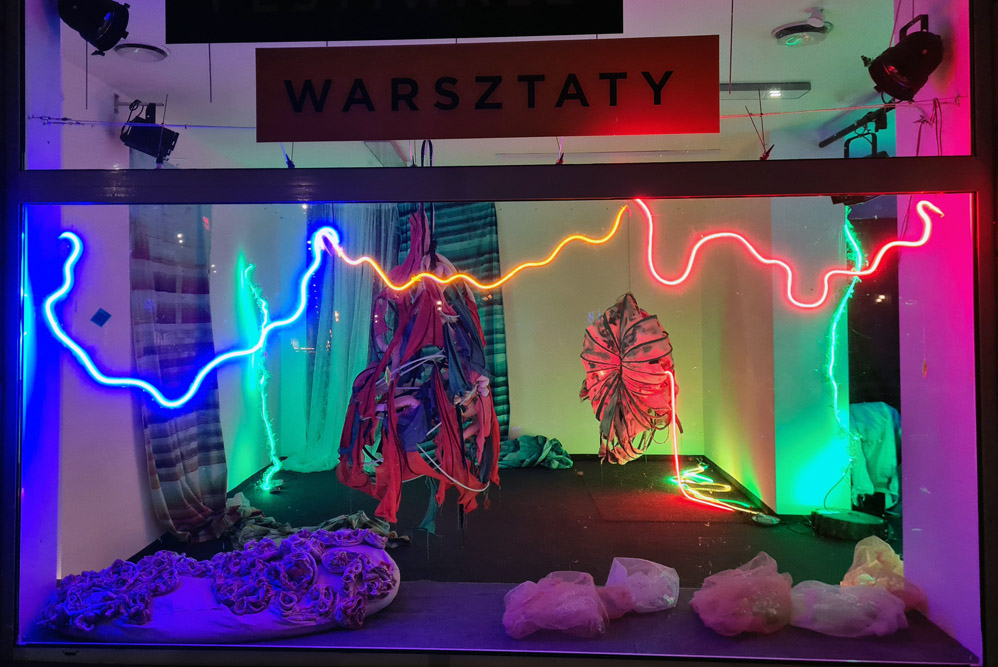
An online map guided visitors to selected places in the centre of Poznań, where QR codes had been placed.
Scanning them brought up short films: fragments of the “life” of the objects presented in the exhibition.